
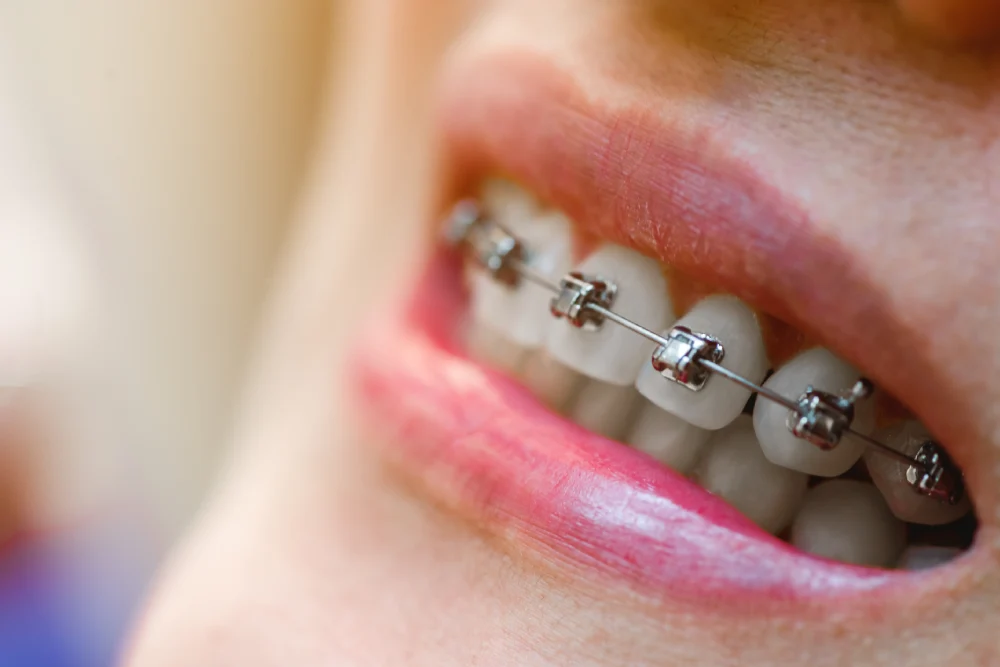
Adult braces can straighten crowded or rotated teeth and correct some problems with the way your upper and lower teeth meet. Fixed braces and clear aligners each have a place, and the choice depends on the movements your teeth need and how your jaws are positioned.
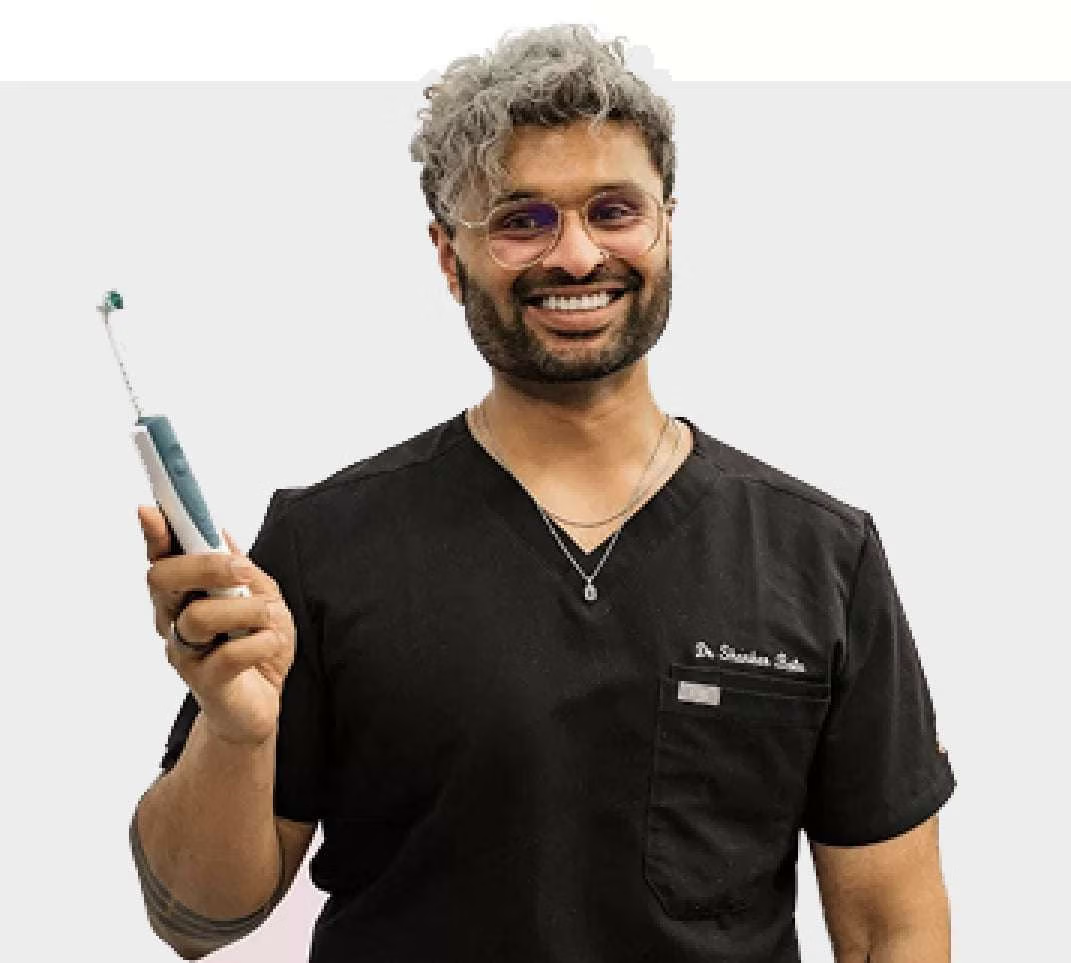
At Beresford Dental Clinic in Central London, our orthodontic clinician, Dr Shankar Bala, has over 10 years’ experience treating hundreds of orthodontic cases and works with both fixed braces and Invisalign. His experience guides how we plan your treatment, from assessing how your teeth and jaws fit together to recommending the approach that matches what you need.
Can braces for adults fix bite problems?
Braces can correct many bite problems in adults by changing how your upper and lower teeth fit together. They also treat crowding, rotation and gaps, which are about where individual teeth sit.
Crowded or rotated teeth
Crowding means there isn’t enough room for your teeth to sit in a straight line, so some may overlap, which makes certain areas harder to clean. A tooth can also twist in its place, showing more of its side than its front. This is called rotation. Either can change how your smile looks.
The amount of crowding and the movements needed to correct it influence which option we recommend. Clear aligners can treat mild to moderate crowding, whereas fixed braces often give more control over complex movements, including difficult rotations. When space is limited, we plan where the room will come from, which may mean reducing a small amount of enamel between some teeth or removing a tooth.
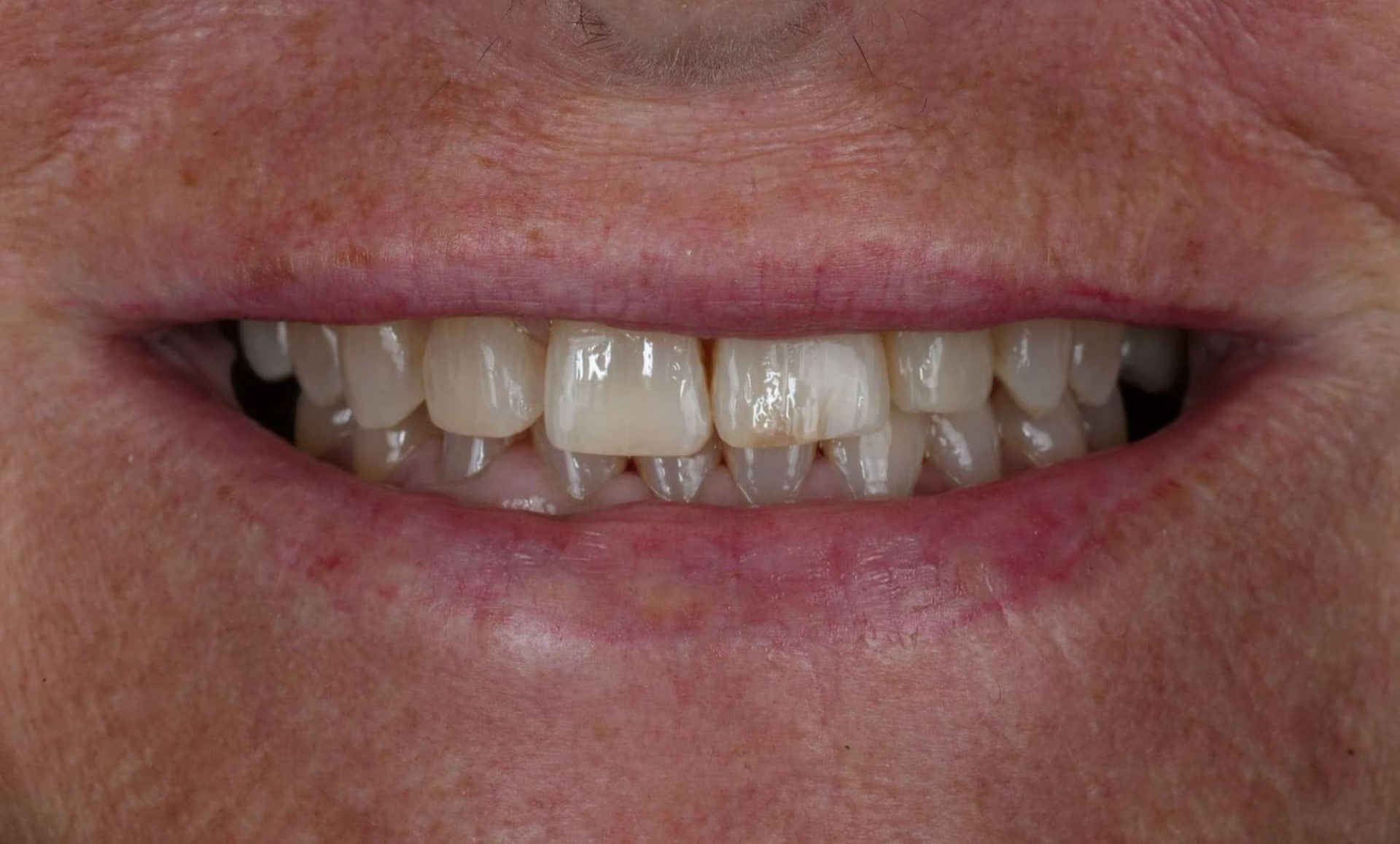
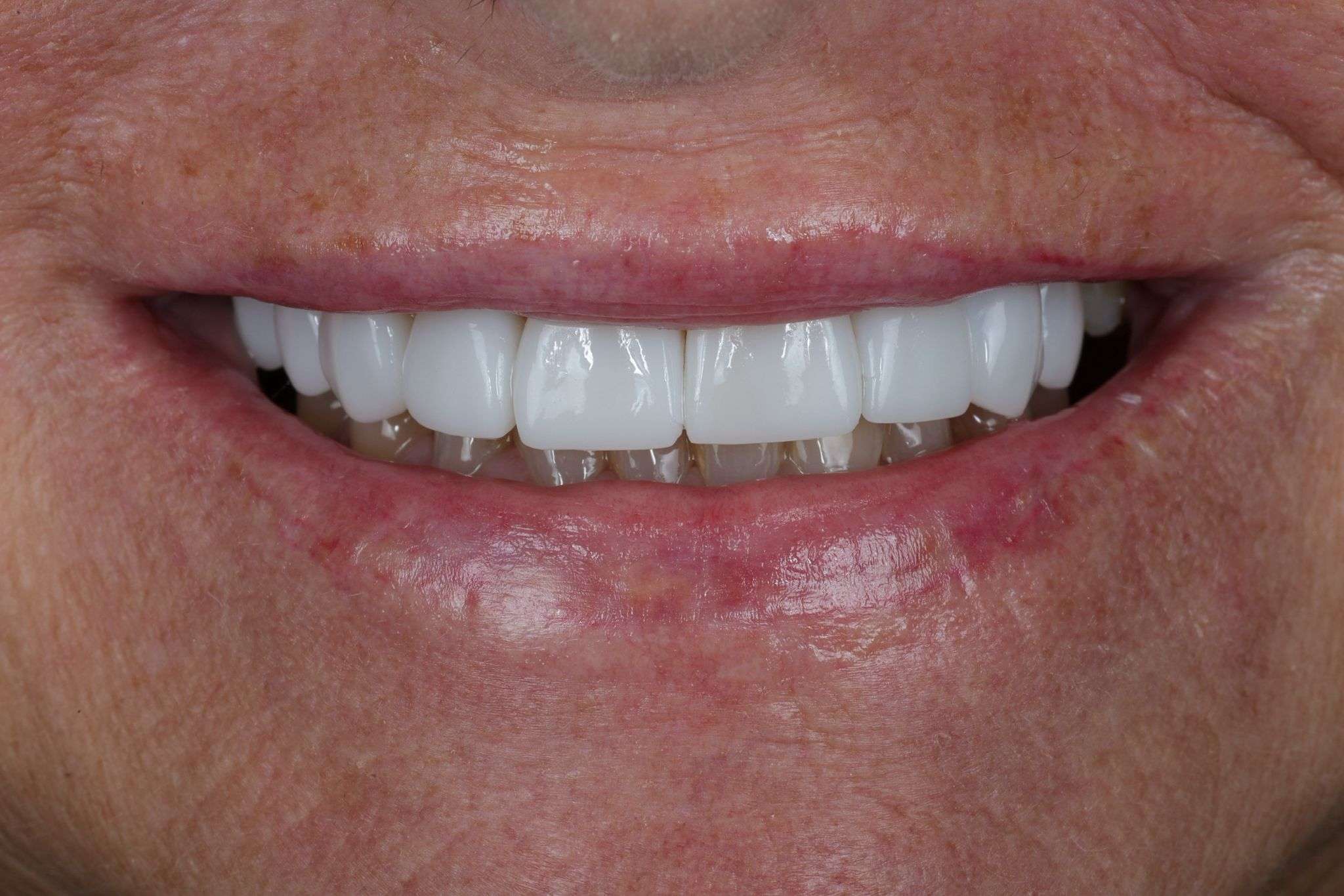
At Beresford Dental Clinic, we treated an adult in his twenties whose upper teeth were severely crowded. One upper premolar had twisted so far that it had almost twisted sideways. Clear aligners alone would have been unpredictable for that movement, so we began with a short fixed phase of about two to three months.
We attached small buttons to the rotated tooth and some nearby teeth, then connected them with an elastic chain. The chain applied a gentle, steady pull to help turn the tooth back into line. This also created space for the surrounding teeth and made the next stage easier to plan.
We then moved on to clear aligners, which he wore for about 20 months to straighten both arches and improve how his upper and lower teeth met. By the end of treatment, the rotation had been corrected and his alignment and bite had improved. We attached fixed retainers behind his upper and lower teeth and provided removable retainers to help maintain the result.
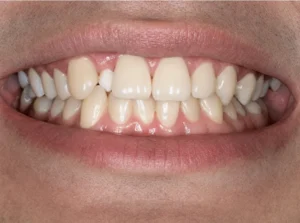 Before
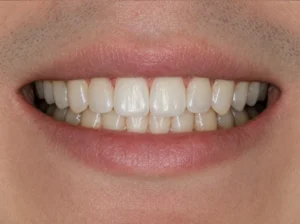 After
Individual results vary and depend on your assessment.
Gaps between teeth
Not every gap needs to be closed. A gap between teeth is called a diastema, often seen between the two upper front teeth. Some gaps have been there for years, while others appear or widen in adulthood. A new or widening gap is sometimes linked to gum disease, so we check what is causing the change before planning treatment. If a tooth is missing, the British Orthodontic Society’s guidance on missing teeth explains that braces can close the space or create room for a replacement tooth.
Deep bite or increased overbite
When you bite together, your upper front teeth normally cover a small part of your lower front teeth. In a deep bite, also called an increased overbite, they cover far more, sometimes hiding most of your lower front teeth.
Correcting a deep bite means changing how far the front teeth overlap, which can involve moving some teeth vertically. Clear aligners can correct some mild to moderate deep bites, and fixed braces are another option. The choice depends on what else is happening in your bite, because a deep bite often comes with crowding or differences in jaw position.
Protruding upper teeth or increased overjet
An increased overjet means your upper front teeth sit further forward than your lower front teeth when you bite together, which is why they stick out. The extra distance is easiest to see from the side, while a deep bite describes how far the upper teeth cover the lower ones.
Braces can reduce an increased overjet by changing the position or angle of the front teeth. An upper jaw that sits further forward or a lower jaw that sits further back also contributes in some cases, so how much improvement is possible depends on both the teeth and the jaws.
Crossbite
In a crossbite, one or more of your upper teeth close inside your lower teeth when you bite together. Normally, the upper teeth fit slightly outside the lower ones, like a lid fitting over a box. With a crossbite, part of that lid fits inside the box instead. It can affect the front or the back teeth, and it can appear on one side of the mouth or on both. A crossbite isn’t always noticeable when you smile, because it affects how your upper and lower teeth meet.
Braces can correct many crossbites in adults, and clear aligners are an option for some. A crossbite can be caused by the position of the teeth, the jaws or both, and where the problem starts affects how it is corrected.
Open bite
An open bite means some upper and lower teeth do not touch when you bite down, even though other teeth do. It most often affects your front teeth, so with your back teeth together you can see a gap between your upper and lower front teeth.
Prolonged thumb or dummy sucking in your childhood and the way your jaws have grown can both contribute to an open bite. Pushing your tongue forward against your teeth when you swallow or speak is also linked with an open bite. Closing the gap is only part of treatment, so we look at what’s causing your open bite, which helps us judge how well the correction is likely to hold.
We usually treat an open bite by moving your front teeth, back teeth or both until the gap closes. When your jaws are a large part of the problem, moving your teeth alone may not be enough.
Underbite or jaw position
An underbite means your lower front teeth close in front of your upper front teeth, which is the reverse of a normal bite. The cause can lie in the position of your teeth or in your jaws themselves, with a lower jaw that sits further forward or an upper jaw that sits further back. Braces move teeth within your jawbone, so they can change how your teeth fit together but cannot change where your jaw sits.
When an underbite comes from the position of your teeth, braces or clear aligners can move your front teeth until the upper ones sit in front of the lower ones, as they do in a normal bite. Small rubber bands called elastics, which stretch between your upper and lower teeth, may be added to help your upper and lower teeth move into their new positions. Tooth movement can also improve some underbites that involve your jaws, although repositioning your jaw takes surgery.
How do metal braces, ceramic braces and Invisalign differ?
Braces for adults fall into two groups: fixed braces, which can be metal or ceramic, and Invisalign, which uses clear aligners. If you are weighing ceramic braces vs Invisalign, the table below shows how they compare.
| Fixed braces (metal or ceramic) | Invisalign | |
| How they work | Brackets attached to your teeth are joined by a wire that gradually moves them | A series of clear plastic aligners fits closely over your teeth and gradually moves them |
| How they look | Metal brackets are more noticeable, while ceramic brackets are closer to the colour of your teeth | Clear, with no brackets or wire |
| Taking them out | They stay on throughout treatment | You take them out for meals and for drinks other than water |
| Daily care | Brushing and flossing around the brackets and wires takes extra care | Clean your teeth before putting them back, and wear them for 20 to 22 hours a day |
Each Invisalign aligner is shaped slightly differently to guide your teeth towards their next position, and you wear each one for a set period before moving on to the next.
Following your orthodontic assessment, we recommend the option that matches your teeth and bite. Our team has experience treating patients with both fixed braces and clear aligners. Align Technology, the maker of Invisalign, awarded Platinum Elite Provider status to our orthodontic clinician, Dr Shankar Bala.
What happens at an orthodontic assessment?
At your orthodontic assessment, we look at your bite, how much room your teeth have to move and where your jaws sit, because adult orthodontics depends on more than the teeth you can see in the mirror. Two adults whose front teeth look equally crooked can need different treatment plans, because the way their teeth and jaws fit together is different.
We use our 3Shape intraoral scanner to build a 3D model of your teeth on screen, which we can turn and view from any angle. The model shows where your teeth are crowded or rotated and how your upper and lower teeth fit together. We read it alongside our examination to plan how each tooth needs to move. The scan captures the visible surfaces of your teeth and gums, so we add X-rays (radiographs) and photographs when your assessment calls for them. X-rays show the roots and the bone around them, while photographs of your teeth and smile record how they looked before treatment, so we can compare your progress as your teeth move into their new positions.
When planning your treatment, we take your gum health and any dental work you already have into account. Gum disease isn’t always painful, so we check for it even when nothing hurts. A crown on a natural tooth moves with that tooth, but an implant is fixed in the jawbone and cannot be moved with braces. If we find active gum disease or untreated decay, we’ll need to address these before moving your teeth.
Can adults get braces on the NHS?
Adults aged 18 or over will usually have to pay for braces in England. According to the NHS guidance on braces, they are usually only free for people under 18 who have a problem with their teeth. Adults may still be able to get NHS orthodontic treatment if it is clinically necessary, and the NHS dental charges guidance says your dentist or orthodontist decides this using a standard assessment. Wanting straighter teeth does not in itself qualify you.
Our practice is fully private, so if you do not qualify for NHS treatment, you can still have braces or Invisalign with us. We keep our pricing transparent, and our fees guide lists the starting price for each treatment, so you can review the cost before you book. To find out what your teeth need, you can contact us at Beresford Dental Clinic to arrange an assessment.
Adult braces in Beresford
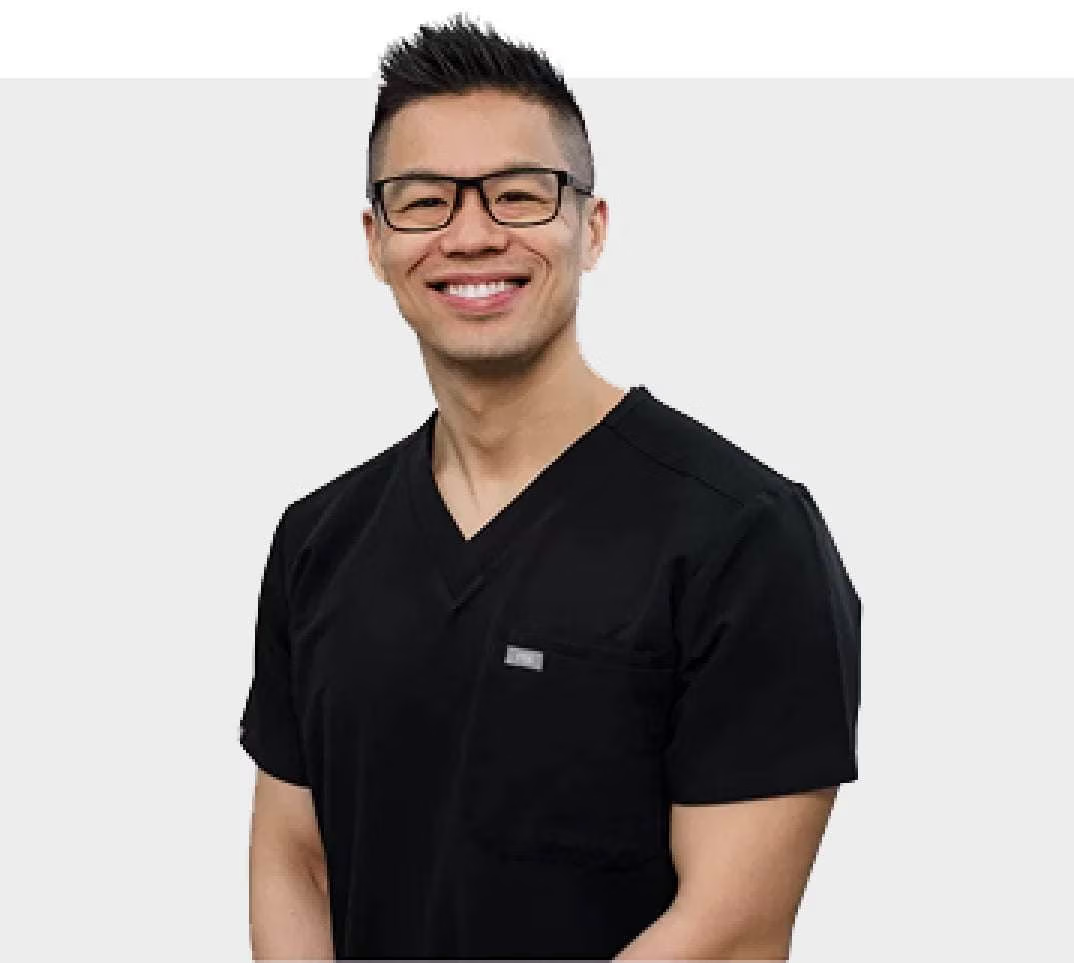
If you are thinking about adult teeth straightening, the first step is an orthodontic assessment with us at Beresford Dental Clinic in Central London, where our team includes Dr Shankar Bala and Dr Inês Do Carmo, who both hold postgraduate qualifications in orthodontics. We examine your teeth and bite, then explain which options suit them and what each involves. If you would like to arrange an appointment, or ask us a question first, you can contact our team.
Frequently asked questions about teeth straightening for adults