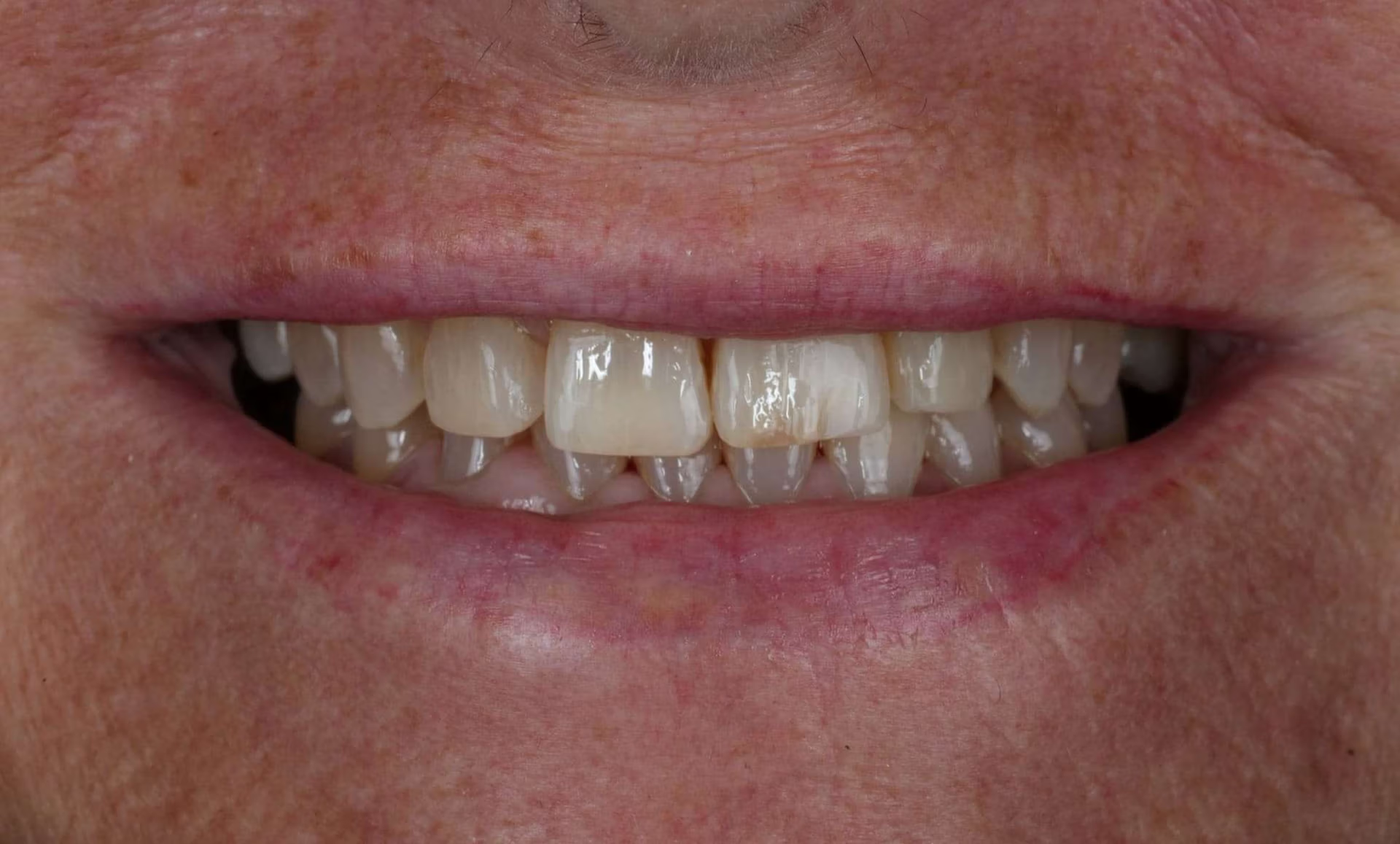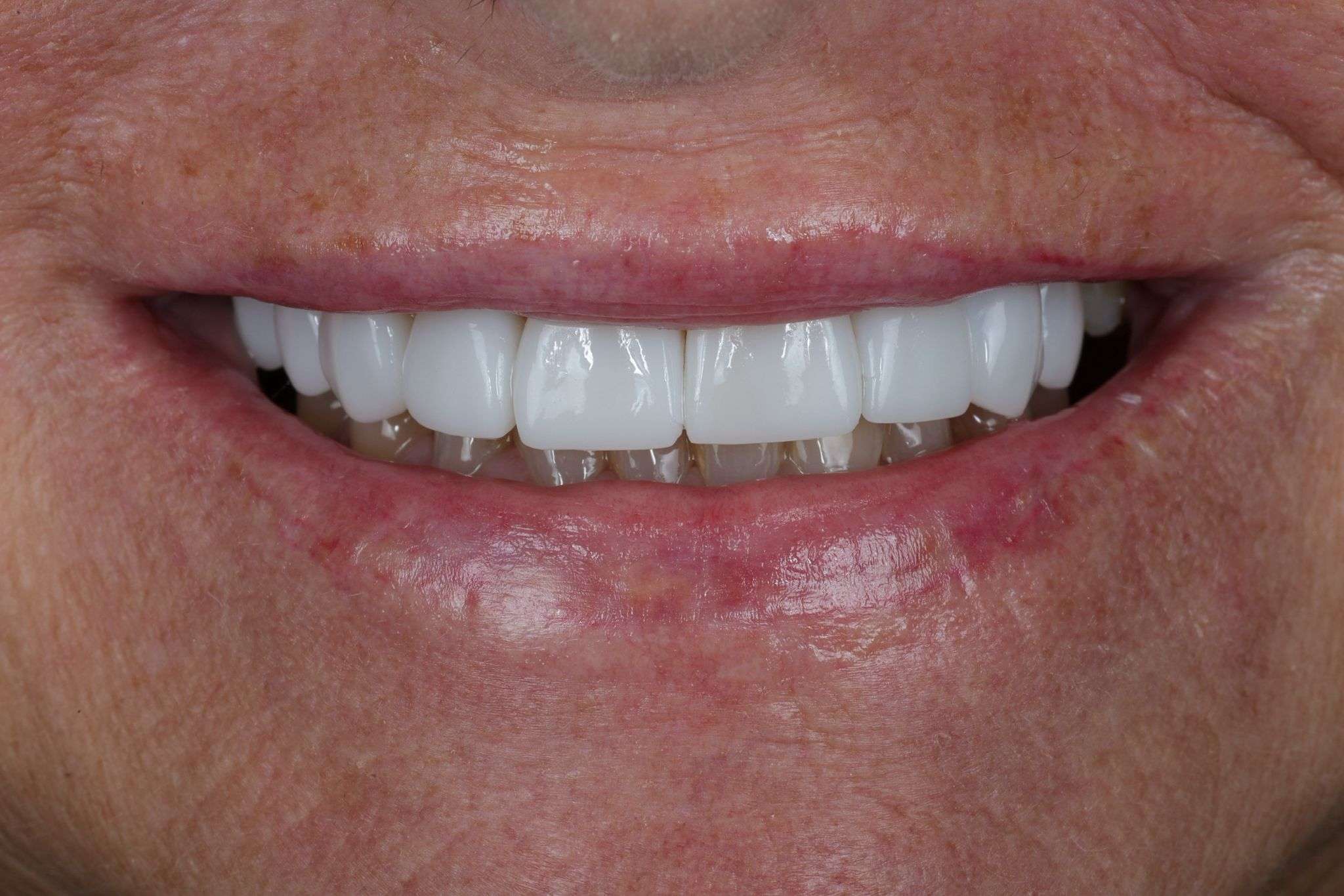

Dental implants and bridges are two of the most established options for replacing missing teeth. A dental implant is an artificial tooth root directly inserted into the jawbone, while a traditional bridge is attached to neighbouring teeth on both sides of the gap. A gap affects how you eat and speak, so the way you choose to fill it matters long term.
If you’re undecided between a bridge and an implant for tooth loss, Beresford Dental Clinic can help. In our Central London clinic, we offer premium yet gentle dental care backed by 3D CBCT imaging and 30+ years of clinical experience.
What is a dental implant?
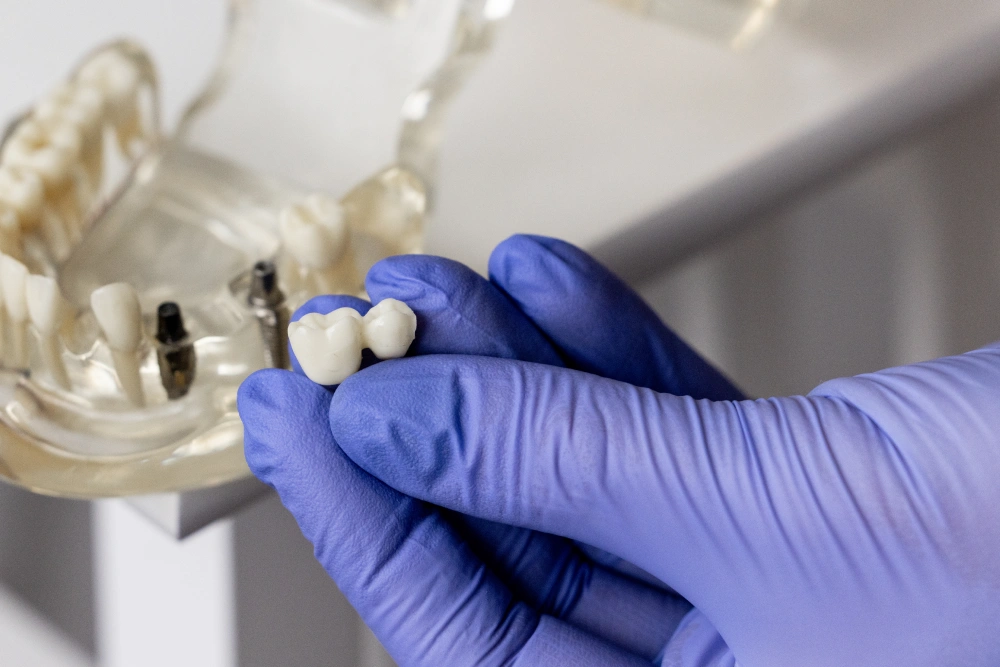
A dental implant is a titanium tooth root embedded into the jawbone, where it’s left to fuse with the surrounding bone. Once it’s healed and integrated into the bone, a single tooth implant is attached to a dental crown to restore the function and appearance of your smile. Where several teeth are missing, two or more implants can support a bridge.
What is a dental bridge?
A dental bridge replaces one or more missing teeth with one or more artificial teeth (called pontics), held in place by the teeth next to the gap. The type of bridge recommended depends on the health and position of those neighbouring teeth:
Traditional bridge: the artificial tooth is held by crowns fitted to the teeth on both sides of the gap. These supporting teeth are reshaped so the crowns fit securely.
Cantilever bridge: the artificial tooth is supported by a crown on one side only. This is usually considered where there’s a suitable tooth on just one side of the gap.
Resin-bonded (Maryland) bridge: the artificial tooth is attached to a thin metal or ceramic wing bonded to the back of a neighbouring tooth, so little or no reshaping is needed. It’s typically used for front teeth, where bite forces are lower.
During your assessment, your dentist will check the strength of the surrounding teeth to confirm which option, if any, is suitable for you. At Beresford Dental Clinic, we offer traditional, cantilever and Maryland bridges, as well as implant-supported bridges where several teeth are missing.
Dentistry bridges vs implants: what’s the difference?
Both replace missing teeth, but implants require surgery while bridges don’t. They also differ in the way they are anchored, how they affect the surrounding teeth and jawbone, and their longevity.
Procedure
- Implants – Surgically placed in the jawbone, with the procedure completed over several months. The treatment period is longer to give implants the time to fuse with the surrounding bone, making the bond strong enough to support tooth restorations for years to come. If it’s required, a bone graft to improve jawbone quality can extend the timeline of an implant treatment.
- Bridges – No surgery required, and the treatment (including making the tooth restoration) is completed over a few weeks.
Appearance and feel
When comparing dental implants vs dental bridges, both are designed to look and feel natural once fitted. The difference is in how they’re anchored. An implant is secured in the jawbone, so many patients find it feels closer to a natural tooth when biting and chewing. A bridge is supported by the neighbouring teeth, with the artificial tooth resting on the gum, so it can take a little time to get used to.
Both are made to match your existing teeth. Using our 3Shape intraoral scanner, we take precise digital impressions without traditional putty moulds, so your crown or bridge is crafted to fit your bite and blend with your smile.
Dental implant or bridge lifespan
- Implants – The titanium root is designed to last 20 years or more, potentially a lifetime with meticulous care. On the other hand, the attached restoration, such as a dental crown, typically lasts 5 to 15 years before it needs to be replaced.
- Bridges – A traditional dental bridge has an average lifespan of 5 to 15 years before it needs replacing, mostly because of decay or gum problems around the supporting teeth.
Impact on neighbouring teeth
- Implants – A dental implant doesn’t affect the surrounding natural teeth.
- Bridges – With a traditional bridge, the teeth on both sides of the gap are reshaped to hold crowns, which support the artificial tooth. If those teeth already need crowns, a bridge restores them and replaces the missing tooth in one treatment.
Bone preservation
- Implants – If bone preservation is a priority when considering an implant versus a bridge, an implant comes out on top. An implant continuously stimulates the jawbone, helping reduce the bone loss that often follows tooth loss.
- Bridges – A dental bridge doesn’t prevent bone loss. The jawbone beneath the bridge can weaken and gradually shrink because nothing replaces the missing root.
Cost
- Implants – Generally, a dental implant has a higher upfront cost than a bridge. Implants are rarely available on the NHS, and Beresford Dental Clinic is a fully private practice.
- Bridges – A dental bridge generally costs less than implants mainly because it’s a non-surgical, simpler procedure that requires fewer dental appointments.
Explore private dental fees at Beresford Dental Clinic in London.
Tooth implant vs dental bridge: at a glance
| Feature | Dental Implants | Dental Bridge |
| Needs surgery | Yes | No |
| Looks and feels natural | Yes | Yes |
| Lifespan | Typically 20+ years, but your crown may need replacing | Average of 5 to 15 years |
| Affects neighbouring teeth | No | Usually: teeth are reshaped for a traditional bridge |
| Helps reduce bone loss | Yes | No |
| Cost | Typically higher upfront cost | Generally lower cost than implants |
Bridge vs implant: choosing the right solution for your smile
An implant is better if you want an option that lasts longer and helps reduce bone loss. On the other hand, a dental bridge is more suitable if you prefer a more affordable, quicker way to replace missing teeth, or if there’s not enough bone to support dental implants.
But even after considering your preferences and suitability factors, the right option for you will only be confirmed with professional assessment. At Beresford Dental Clinic, this involves using a CBCT scan for precise digital imaging, so we can plan your implant’s position precisely before treatment. We’ll also provide a written treatment plan including full costs to help you prepare for the procedure. Your treatment will be carried out by an expert dental team led by our highly-respected lead implant dentist, Dr Ashley Watson, who has over 30 years of clinical expertise.
Feel confident with your decision, starting with the right assessment. At Beresford Dental Clinic, we combine expert clinical guidance and advanced diagnostic technology to evaluate your suitability for a bridge or dental implants.
Book a dental implant consultation and experience personalised treatment in a calm, private setting in our Central London clinic.